
 |
 |
 |
 |
 |
 |
 |
 |
 |

 |
Phoenix Makes First Trench In Science Preserve
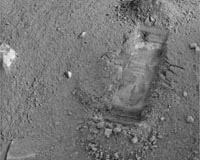
Tucson AZ (SPX) Jun 19, 2008 NASA's Phoenix Mars Lander began digging in an area called "Wonderland" early Tuesday, taking its first scoop of soil from a polygonal surface feature within the "national park" region that mission scientists have been preserving for science. The lander's Robotic Arm created the new test trench called "Snow White" on June 17, the 22nd Martian day, or sol, after the Phoenix spacecraft landed on May 25. Newly planned science activities will resume no earlier than Sol 24 as engineers look into how the spacecraft is handling larger than expected amounts of data. During Tuesday's dig, the arm didn't reach the hard white material, possibly ice, that Phoenix exposed previously in the first trench it dug into the Martian soil. That's just what scientists both expected and wanted. The Snow White trench is near the center of a relatively flat hummock, or polygon, named "Cheshire Cat," where scientists predict there will be more soil layers or thicker soil above possible white material. The Snow White trench is about two centimeters deep (about three-quarters of an inch) and 30 centimeters (about a foot) long. The Phoenix team plans at least one more day of digging deeper into the Snow White trench. They will study soil structure in the Snow White trench to decide at what depths they will collect samples from a future trench planned for the center of the polygon. Meanwhile, the Thermal and Evolved-Gas Analyzer (TEGA) instrument continues its ongoing experiment in the first of its eight ovens. TEGA has eight separate tiny ovens to bake and sniff the soil to look for volatile ingredients, such as water. The baking is performed at three different temperature ranges. Community Email This Article Comment On This Article Share This Article With Planet Earth
Related Links Phoenix at LPL Phoenix at JPL Phoenix at NASA Mars News and Information at MarsDaily.com Lunar Dreams and more
 NASA Phoenix Lander Bakes Sample As Arm Digs Deeper
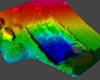 Tucson AZ (SPX) Jun 18, 2008
One of the ovens on NASA's Phoenix Mars Lander continued baking its first sample of Martian soil over the weekend, while the Robotic Arm dug deeper into the soil to learn more about white material first revealed on June 3. |
|
|

| The content herein, unless otherwise known to be public domain, are Copyright 1995-2007 - SpaceDaily.AFP and UPI Wire Stories are copyright Agence France-Presse and United Press International. ESA Portal Reports are copyright European Space Agency. All NASA sourced material is public domain. Additional copyrights may apply in whole or part to other bona fide parties. Advertising does not imply endorsement,agreement or approval of any opinions, statements or information provided by SpaceDaily on any Web page published or hosted by SpaceDaily. Privacy Statement |
 del.icio.us
 Digg
Digg Reddit
 YahooMyWeb
 Google
 Facebook