| September 04, 2008 |  |
RoboDaily Advertising Kit |

|
Billion-dollar European probe set for asteroid encounter Paris (AFP) Sept 3, 2008 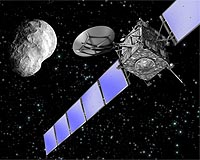 Far from Earth, a robot spacecraft has been prodded from deep slumber to make a rare encounter with an asteroid, the intriguing orbital debris that could offer clues into the making of the Solar System. The pride of the European Space Agency (ESA), the probe Rosetta has been ordered out of hibernation four and a half years into a 10-year trek that will take it into the dark chill of deep ... read more
|

| |||||||||||||||

| Previous Issues | Sep 03 | Sep 02 | Sep 01 | Aug 29 | Aug 28 |
Robotic helicopters teach themselves  Stanford, Calif. (UPI) Sep 3, 2008
 U.S. scientists say they have created robotic helicopters that can teach themselves to fly by "watching" other helicopters. Stanford University Professor Andrew Ng, who led the project, said the achievement is an important demonstration of "apprenticeship learning," in which robots use an artificial intelligence system to learn by observing an expert, rather than by having software ... more Phoenix Analyzing Deepest Soil Sample Yet  Tucson, AZ (JPL) Sep 03, 2008
Scientists have begun to analyze a sample of soil delivered to NASA's Phoenix Mars Lander's wet chemistry experiment from the deepest trench dug so far in the Martian arctic plains. Phoenix has also been observing movement of clouds overhead. The lander's robotic arm on Sunday sprinkled a small fraction of the estimated 50 cubic centimeters of soil that had been scooped up from the ... more Robots Learn To Follow  Davis CA (SPX) Sep 01, 2008
Whether driving on the highway or walking down the street, we pick up on both deliberate signals and unconscious cues to predict what other people are going to do and act accordingly. But robots have trouble following each other around, for example, when a leader turns a corner and disappears from sight. Researchers at UC Davis have come up with a control system that allows a robot to pick ... more Phoenix Lander Pictures Show Robotic Arm's Workspace After 90 Sols  Tempe AZ (SPX) Aug 29, 2008
New pictures from NASA's Phoenix Lander show just what a busy summer the spacecraft on Mars - and its science team at The University of Arizona in Tucson - has been having. During the first 90 Martian days, or sols, after its May 25, 2008, landing on an arctic plain of Mars, the lander dug several trenches in the workspace reachable for its robotic arm. The lander's Surface Stereo ... more Mid-Depth Soil Collected For Lab Test On NASA's Mars Lander  Tucson AZ (SPX) Aug 25, 2008
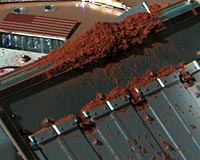
NASA's Phoenix Mars Lander has scooped up a soil sample from an intermediate depth between the ground surface and a subsurface icy layer. The sample was delivered to a laboratory oven on the spacecraft. The robotic arm on Phoenix collected the sample, dubbed "Burning Coals," from a trench named "Burn Alive 3." The sample consisted of about one-fourth to one-half teaspoon of loose soil ... more |
robot:
 mars-phoenix: 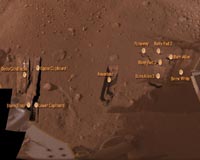 solarcell:  |
 Albuquerque NM (SPX) Aug 20, 2008
Optomec has announced that they will showcase their patented Aerosol Jet Print technology for higher efficiency solar cells, at the 23rd European Photovoltaic Solar Energy Conference and Exhibition in Valencia, Spain on September 1st-4th. Optomec will be available to discuss the Aerosol Jet platform. In addition, Manz Automation, Optomec's strategic wafer automation partner for the PV ... more HLS Systems Enters China's Wind Market  Hangzhou, China (SPX) Aug 14, 2008
HLS Systems International has announced that it is in late stage discussions with some of the largest wind turbine producers in China to provide their critical automation control systems. HLS expects to solidify a formal relationship with one or more of these companies in the next few months and expects to begin producing wind power control systems later this year. Dr. Wang Changli, HLS' C ... more Soil Studies Continue At Phoenix Mars Lander Site  Pasadena CA (SPX) Aug 13, 2008
Vibration of the screen above a laboratory oven on NASA's Phoenix Mars Lander on Saturday, Aug. 9, succeeded in getting enough soil into the oven to begin analysis. Commands were sent for the lander's Thermal and Evolved-Gas Analyzer (TEGA) to begin analysis Sunday of the soil sample from a trench called "Rosy Red." Phoenix's robotic arm delivered soil Thursday from the Rosy Red trench ... more Robots may enhance disabled people's lives  Rochester, N.Y. (UPI) Aug 11, 2008
 A U.S. study foresees robots as improving both the quality and flexibility of the lives of people with disabilities that affect the use of their limbs. The robotics engineering research, sponsored by The National Science Foundation, utilized physiological information -- called bio-signals -- produced by the human body to improve external assistive devices called orthoses that help ... more Japanese Researchers Eye e-Skin For Robots  Tokyo, Japan (AFP) Aug 12, 2008
Japanese researchers say they have developed a rubber that is able to conduct electricity well, paving the way for robots with stretchable "e-skin" that can feel heat and pressure like humans. The material is the first in the world to solve the problems faced by metals -- which are conductive but do not stretch -- and rubber, which hardly transmits electricity, according to the team at the ... more |
mars-phoenix:
 miltech:  energy-tech:  mars-phoenix: 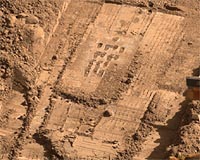 |
 London (AFP) July 30, 2008
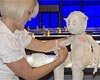
David McGoran cradles his baby in his arms. As he looks down into its big, dark eyes, it turns its head towards him and blinks, looking contented as it curls a bony white finger around his hand. But the "baby" is not human. And it looks more like the evil Gollum from "The Lord Of The Rings" movies except in a hemp romper suit with cloth ears than a gurgly infant. Meet Heart Robot ... more Europe And Japan Join Forces To Map Out Future Of Intelligent Robots  Paris, France (SPX) Jul 31, 2008
The field of robotics could be poised for a breakthrough, leading to a new generation of intelligent machines capable of taking on multiple tasks and moving out of the factory into the home and general workplace. The great success of robots so far has been in automating repetitive tasks in process control and assembly, yielding dramatic cuts in production, but the next step towards ... more Phoenix Lander Working With Sticky Soil  Tucson AZ (SPX) Jul 30, 2008
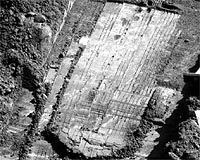
Scientists and engineers on NASA's Phoenix Mars Mission spent the weekend examining how the icy soil on Mars interacts with the scoop on the lander's robotic arm, while trying different techniques to deliver a sample to one of the instruments. "It has really been a science experiment just learning how to interact with the icy soil on Mars -- how it reacts with the scoop, its stickiness ... more Phoenix Revises Method To Deliver Icy Sample 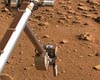 Tucson AZ (SPX) Jul 29, 2008
NASA's Phoenix Mars Lander's robotic arm will use a revised collection-and-delivery sequence overnight Sunday with the goal of depositing an icy soil sample in the lander's oven. "We are going to modify the process we ran on Sol 60 to acquire another icy sample and attempt to deliver it to TEGA," the Thermal and Evolved-Gas Analyzer, said Barry Goldstein, Phoenix project manager from NASA ... more Lander Collects Icy Soil But Needs To Work On Delivery 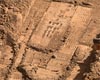 Tucson AZ (SPX) Jul 28, 2008
NASA's Phoenix Mars Lander's robotic arm collected a more than adequate amount of icy soil for baking in one of the lander's ovens but will need to adjust how it delivers samples. Engineers determined the rasping and scraping activity collected a total of 3 cubic centimeters of icy soil, more than enough to fill the tiny oven cell of the Thermal and Evolved-Gas Analyzer, or TEGA. ... more
|
mars-phoenix:
 mars-phoenix: 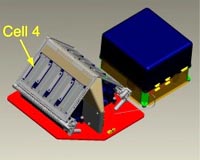 mars-phoenix:  mars-phoenix:  |
|
| Previous Issues | Sep 03 | Sep 02 | Sep 01 | Aug 29 | Aug 28 |
| The contents herein, unless otherwise known to be public domain, are Copyright 1995-2007 - SpaceDaily. AFP and UPI Wire Stories are copyright Agence France-Presse and United Press International. ESA Portal Reports are copyright European Space Agency. All NASA sourced material is public domain. Additional copyrights may apply in whole or part to other bona fide parties. Advertising does not imply endorsement, agreement or approval of any opinions, statements or information provided by SpaceDaily on any web page published or hosted by SpaceDaily. Privacy statement |